23 October 2026
James Hunt, 1976: Fuji, fifty years on
Fifty years ago, the 1976 World Championship was settled in the rain at the foot of Mount Fuji. What happened that season, and on that afternoon, told plainly.
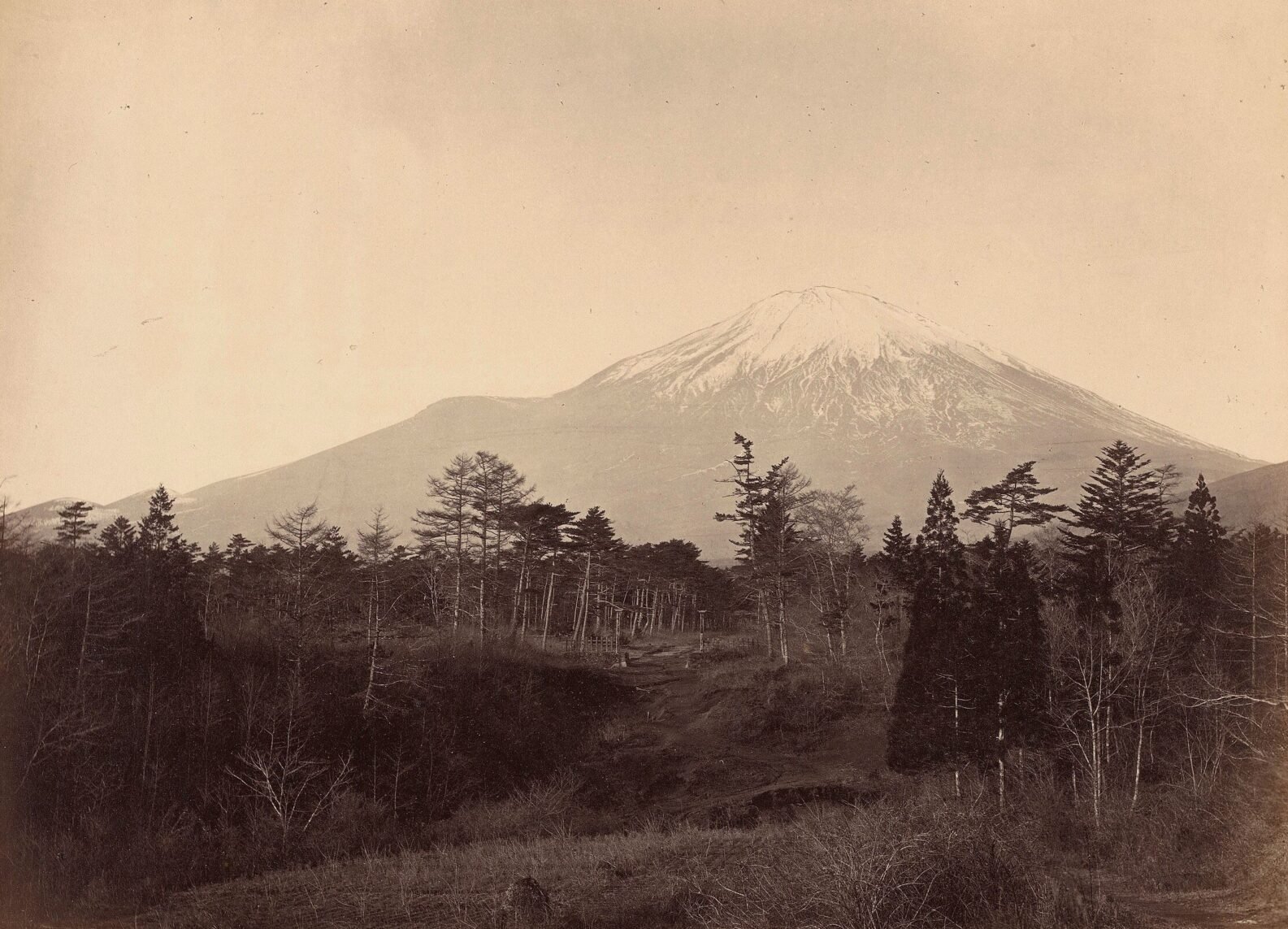
For James Hunt, 1976 ended in the rain at the foot of Mount Fuji. On Sunday 24 October, fifty years ago, the last race of the Formula One World Championship was run at Fuji Speedway in weather so poor that several drivers argued it should not be run at all. Hunt finished third in his McLaren and took the title by a single point from Niki Lauda. The season has been retold many times since, in print and on film. The plain version is remarkable enough, so here it is.
A season of protests and appeals
Hunt had joined McLaren for 1976, his first season with the team, after the small Hesketh team he had driven for was left without a sponsor. Lauda was the reigning champion, at Ferrari, and he began the year as the man to beat. McLaren was a British team, and the older story of the green that British cars once raced in is told in why British racing green is green.
Much of the summer was fought in committee rooms as well as on circuits. Hunt won in Spain and was disqualified because his car was found to be too wide; two months later, on appeal, the win was given back. He won the British Grand Prix too, and lost it: Ferrari appealed against his taking part in the restarted race, and in the autumn the victory was handed to Lauda.
The Nürburgring, and six weeks
On 1 August, on the second lap of the German Grand Prix at the Nürburgring, Lauda’s Ferrari left the road, struck an embankment and caught fire. He was trapped in the car and badly burned before other drivers pulled him out, and in hospital he was given the last rites.
He missed two races. Six weeks after the accident he was back at Monza for the Italian Grand Prix, with his burns still bandaged, and he finished fourth. Ferrari, which had signed Carlos Reutemann while he was away, ran three cars that weekend.
While he was away, Hunt had closed the gap. The British disqualification then cost him nine points, but he won in Canada and again in the United States. With one race left, Lauda had 68 points and Hunt 65.
James Hunt, 1976: the arithmetic before Fuji
Three points is not much in a championship that gave nine for a win. If Lauda finished ahead of Hunt, Lauda was champion. If Lauda scored nothing, a fourth place would do for Hunt, because a tie on points would be settled by wins, and Hunt had won more races that year.
The Japanese Grand Prix was a new fixture: the first World Championship race ever held in Japan. Mario Andretti put his Lotus on pole, with Hunt alongside and Lauda third.
Two laps
On race day the rain came down hard, with fog over the circuit and water running across the track. There was a long argument about whether to start. In the end the organisers went ahead, and not every driver was happy about it, Lauda among them.
Hunt took the lead at the start. At the end of the second lap Lauda drove into the pits and withdrew. He judged the conditions too dangerous to go on, and he said, as Formula 1 has recorded, that sometimes he could not tell which direction the car was going. Carlos Pace and Emerson Fittipaldi soon pulled out too, as Larry Perkins had after a single lap.
It is worth pausing on. A driver who had nearly died in a burning car twelve weeks earlier, leading the championship, chose to stop rather than drive on half-blind. It has been admired ever since, and rightly.
Third, and enough
For most of the afternoon Hunt led. Then, as the track began to dry, his wet-weather tyres began to wear, and he slipped back to third behind Patrick Depailler’s Tyrrell and Andretti. Depailler’s tyre gave out and he stopped for a new one. Then Hunt’s did the same.
He came into the pits late in the race for fresh tyres and rejoined in fifth place. With only a few laps left he caught Alan Jones and Clay Regazzoni, both nursing worn tyres of their own, and passed them. Andretti won, Depailler was second, and Hunt was third.
There was some confusion at the finish about where he had placed, and for a few minutes Hunt, by the usual accounts, believed he had not done enough. He had. Four points for third gave him 69 to Lauda’s 68: the World Championship, by one point.
The last British champion for a while
No British driver would win the title again until Nigel Mansell in 1992, sixteen years later. Hunt raced on until 1979, then became a broadcaster with the BBC. He died in 1993, aged 45.
Lauda won the championship again in 1977, with Ferrari, and went on to a long second life in motor racing and in aviation. He died in 2019. The two men had been friends away from the circuit, and by most accounts their rivalry on it was hard but fair.
Fifty years on
What stays with people about Fuji is not really the arithmetic. It is the picture of two very different men making two very different decisions on the same wet afternoon, and both of them being, in their way, right. One stopped because the risk was not worth it to him. The other kept going because it was. Neither has been short of admirers since.
If you would like more, Formula 1’s own look back at the Japanese Grand Prix is a good place to start, and rain, as it happens, has a smell with a name of its own, which we wrote about in our note on petrichor.
Our own motor racing memory is a quieter one. Racing Green, our green chypre, keeps the paddock at first light, before anyone has arrived: galbanum, bergamot and cut grass, then violet leaf, vetiver and clary sage, drying down to saddle leather, oakmoss and cedarwood. It belongs to a cold, clear morning rather than a wet Sunday in Japan, and it sits beside the other five on the fragrances page.
If it is the one you would choose first, register free for a founding place and tell us. It commits you to nothing, and your answer helps decide which three we make first.