1 November 2026
Why old books smell as they do, and a perfume that smells like old books
The smell of an old book is paper slowly changing, and scientists at UCL have spent years working out what is in it. What they found, and where The Library comes in.
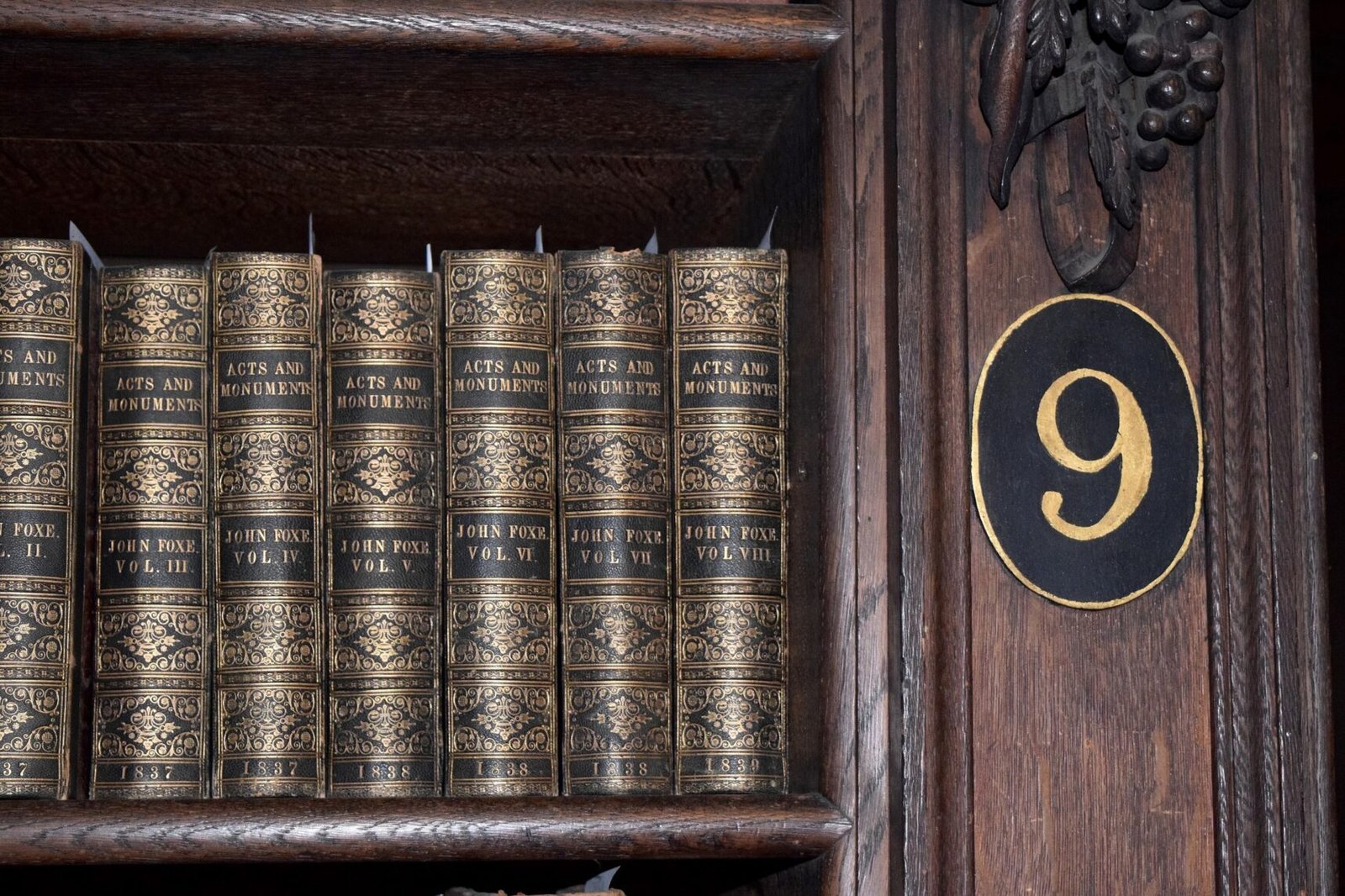
Open a book that has sat on a shelf for a hundred years and the smell arrives before the words do: dry, sweetish, a little sharp, faintly like vanilla. People look for a perfume that smells like old books because that smell means something to them, usually a particular room, and often a particular person. It turns out that it also means something to chemists. Scientists at University College London have spent years taking it apart, molecule by molecule, and what they found is rather lovely.
What the smell of old books is made of
Paper is mostly cellulose, the long chains of sugar molecules that make up plant fibres. Cheaper paper made from ground wood pulp also keeps much of its lignin, the material that binds those fibres together in a tree. Many historic papers also contain rosin, and many are acidic, and both of those affect how a paper ages.
None of these stays the same for ever. Over decades the cellulose and the lignin slowly break down, and as they do they give off small, volatile molecules into the air between the pages. The smell of an old book is, strictly, the smell of a book very gradually changing. Conservators know this better than anyone, which is how the science began.
The 2009 study at UCL
In 2009 a team led by Matija Strlič, at University College London’s Centre for Sustainable Heritage, published a paper in the journal Analytical Chemistry with the pleasing title “Material degradomics: on the smell of old books”.
They took samples of historic paper, aged them for a further day in the laboratory, and analysed the gases the paper released. Then they compared those gases with what they knew about each paper: how much rosin and lignin it contained, how acidic it was, and how far its cellulose had already broken down. The point was practical. If a paper’s smell could tell you its condition, conservators could pick out degraded items in a collection without cutting a single sample from them.
Among the compounds they discussed were acetic acid, the sharp note of vinegar, and furfural, both already known as products of ageing paper. They also identified markers for rosin and lignin, and put forward other compounds of interest. The paper opens by describing the smell itself: grassy notes with “a tang of acids and a hint of vanilla” over an underlying mustiness.
Where the vanilla comes from
The hint of vanilla is thought to come from the lignin. In 2017 Cecilia Bembibre and Matija Strlič, also at UCL, published a follow-up study in the open-access journal Heritage Science. Summing up the research of the previous decade, they wrote that some of the volatile compounds from old paper can be linked specifically to the breakdown of cellulose, such as furfural, and others to the breakdown of lignin, such as benzaldehyde and vanillin.
Vanillin is the main flavour molecule of vanilla. Benzaldehyde is the molecule people tend to describe as almond. Their study also lists hexanal, a compound described with words such as grass, tallow and fat.
Chocolate, coffee and a cathedral library
The 2017 study did something else that makes it a pleasure to read: it asked people what they smelled.
At the Birmingham Museum and Art Gallery, visitors were offered an unlabelled smell taken from a historic book. Seventy-nine people gave 120 descriptions between them. The word that came up most often was “chocolate”, with 21 mentions, followed by “coffee” with ten, then “old”, “wood” and “burnt”. It sounds whimsical until you read the explanation: cocoa and coffee come from roasted plant materials, and they share many of the same volatile compounds as decaying paper, including furfural, acetic acid and vanillin. The authors are careful to add that chocolate and coffee were among the other smells on offer that day, which may have coloured some answers.
The researchers also took a small panel into the Dean and Chapter Library at St Paul’s Cathedral, the eighteenth-century room designed by Christopher Wren. Every one of the seven assessors chose “woody”. Most chose “smoky” and “earthy”, and some chose “vanilla”. More than seventy per cent found the smell pleasant. From all of this the team built what they called the Historic Book Odour Wheel, a way of recording historic smells so that they are not lost.
Is the smell of old books a good sign?
For the book, not entirely. The molecules that make the smell are being released because the paper is breaking down. The original 2009 study was, after all, a way of spotting degradation by its smell.
For the reader, it is another matter. The smell is part of why a library feels the way it does. The 2017 study quotes entries from the St Paul’s library guest book in which visitors praise its smell, and we suspect most people who love old books would say the same of their own favourite.
A perfume that smells like old books
We did not set out to bottle a chemistry experiment. We set out to bottle a room. The Library, our woody amber eau de parfum, is the library after dinner: panelled walls, leather-bound spines, a fire allowed to burn low, and pipe tobacco forgotten in a waistcoat pocket.
It opens with a spark of pink pepper and green cardamom, with bergamot, like a match struck in a dim room. At its heart, cured tobacco leaf and papyrus recall old paper and older bindings, softened by orris. The base is Virginia cedar, labdanum and benzoin, warm without ever becoming sweet.
How to wear it
One spray at the throat and one at the inside of the wrist, a little before dinner. It is at its best from autumn into winter, on cashmere and corduroy, and it grows warmer and closer as the evening goes on. Wool holds a scent well, which is why we suggested The Library in our note on fragrance for tweed season. And if you are torn between it and another of the six, the Consultation begins with the right question: which room would you return to?
If The Library is the one you would choose first, register free for a founding place and tell us so. It commits you to nothing, and it helps decide which three we make first.