9 October 2026
Petrichor, and the perfume that smells like rain
The smell of rain on dry ground was named in 1964, by two scientists writing in Nature. What petrichor is, and what a perfume that smells like rain can honestly offer.
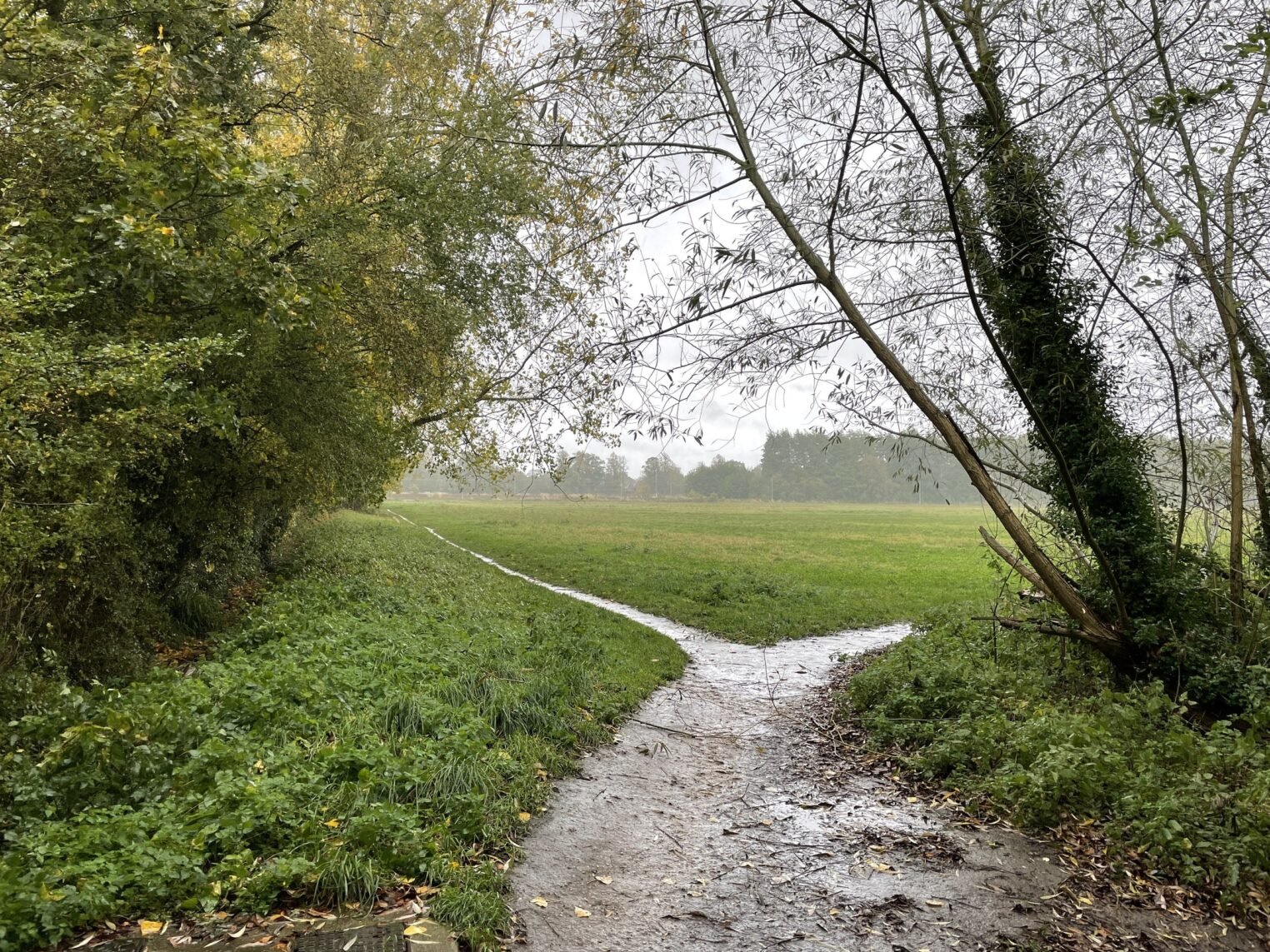
There is a particular smell that arrives with the first rain after a dry spell. It comes up from the pavement and the flowerbeds before you have properly noticed the clouds, and it is gone again within the hour. It has a name, petrichor, and the name is younger than most people expect. Anyone looking for a perfume that smells like rain is really looking for those few minutes, so it is worth knowing what they are made of.
A word coined in 1964
In March 1964 two scientists at CSIRO in Melbourne, Isabel Joy Bear and Richard Thomas, published a short paper in Nature called “Nature of Argillaceous Odour”. “Argillaceous” means clayey, and the odour in question was the one every gardener knows. They needed a better word for it, and they made one.
Petrichor joins two pieces of Greek. Petra is stone. Ichor is the ethereal fluid said to run in the veins of the gods. The name describes something like the essence of stone, which is not far from what they found.
What Bear and Thomas found
Working with clays and rocks that had been exposed to dry weather, they extracted a yellowish oil. It came, they concluded, from oils given off by plants in dry spells and held in the pores of clay, stone and soil. When the humidity rises and the first drops fall, the oil is released into the air, and we smell it.
They were not the first to try to capture it. In India, a small perfumery trade had already captured the smell in sandalwood oil and sold it as matti ka attar, “earth perfume”. What Bear and Thomas added was the chemistry, and the word.
What you are smelling when it rains
Petrichor in the strict sense is the smell of that plant oil. But the smell we call rain is a small chorus, and the loudest voice in it belongs to soil bacteria.
Geosmin, the smell of earth
Bacteria of the genus Streptomyces, which live in almost any healthy soil, make a compound called geosmin. It was isolated and named in 1965 by Nancy Gerber and Hubert Lechevalier, and it is the reason a freshly turned bed or a damp wood smells so plainly of earth. Our noses are remarkably good at finding it, even in tiny amounts.
Why the bacteria bother was long a puzzle. In 2020 a team from Lund University and the Swedish University of Agricultural Sciences showed that geosmin attracts springtails, the minute creatures that live in leaf litter. The springtails feed on the bacteria and carry away their spores. The smell of a woodland walk, it turns out, is partly an invitation written for someone much smaller than us.
Why a light shower smells stronger than a storm
A likely answer to how the smell reaches us came only in 2015. Using high-speed cameras, engineers at MIT watched raindrops land on soils and other porous surfaces. Each drop traps tiny bubbles of air, which rise through it and burst at the top, flinging a fine mist of particles into the air. They found that light and moderate rain throws up more of these particles than heavy rain does.
That matches what most of us have noticed without thinking about it. A downpour washes the air clean. A soft shower on dry ground, the kind that hardly wets your coat, is the one that smells.
The smell of rain in England
The English have more practice than most. We know the smell of rain on a lane in August, on hot stone in a walled garden, on a cricket field at tea, on a towpath in the first week of July. In each case the ground matters as much as the weather: chalk, clay, dry grass and old brick all give back something slightly different.
October has its own version. The ground is still warm from the summer, the leaves are beginning to come down and the first proper rain of autumn brings up a smell that is part earth, part green, part leaf mould. It is less a single note than a place, which is why it is so hard to put in a bottle.
Is there a perfume that smells like rain?
Honestly, not exactly. Petrichor is a moment, not a material. It depends on dry ground, on a particular kind of shower and on the minutes just after, and no fragrance can reproduce all of that on skin for a whole day. What a perfumer can do is choose materials that put you in the right place, and let your memory do the rest.
The notes that suggest rain
- Green notes, such as galbanum, violet leaf and cut grass, give the sharp, wet brightness of leaves after a shower.
- Vetiver, the root of a grass, is earthy and cool, with something almost mineral about it.
- Oakmoss is the smell of a wood after rain: green, a little bitter, and older than it first seems.
- Cucumber, fig leaf and mint lean the other way, towards water and cool air rather than earth.
A perfume that smells like rain is usually built from some of these, held together so that nothing shouts. The aim is the feeling of the air after a shower, not a photograph of a puddle.
Two of ours, after the rain
None of the HERITAGE fragrances is called rain, and we would not claim that any of them is petrichor. But two of them live very near it.
Racing Green, our green chypre and the house signature, begins with galbanum, bergamot and cut grass, then violet leaf, vetiver and clary sage, and settles on saddle leather, oakmoss and cedarwood. Its memory is the paddock at first light: cut grass still wet with dew, an engine warming in the cold. It is the green, earthy end of the smell of rain, the end with moss and roots in it.
Henley is the other end. It is an aromatic fresh fragrance of bergamot, cucumber and garden mint, with fig leaf, orange blossom and a clean linen accord, over white cedar, ambrette and vetiver. Its memory is the river in the first week of July, with mist lifting from the water before the first race. If your idea of rain is a cool morning by the water rather than a wet lane, this is the nearer of the two.
The best way to tell which is yours is to wear them on ordinary days, not in a shop. The Discovery Set, which opens with our first pre-orders, holds all six in 2 ml atomisers, so you can try Racing Green on a grey morning and Henley on a bright one, and see which one your memory answers to.
What the rain leaves behind
The smell of rain lasts a few minutes because the conditions for it last a few minutes. That is part of why people love it. It belongs to a change in the weather, and a change in us: the pause on the doorstep, the window opened a little wider, the sense that the afternoon has been rinsed.
A fragrance cannot keep the rain. It can keep the feeling of having stood in it, and bring it back on a dry day.
If you would like help finding the one that does that for you, take the Consultation: four questions, and the House will suggest two.