22 October 2026
Perfume notes explained: top, heart and base
Top, heart and base describe a fragrance in time: what you smell first, what stays, and what is left at the end of the day. Here is what the words mean, and what they do not.
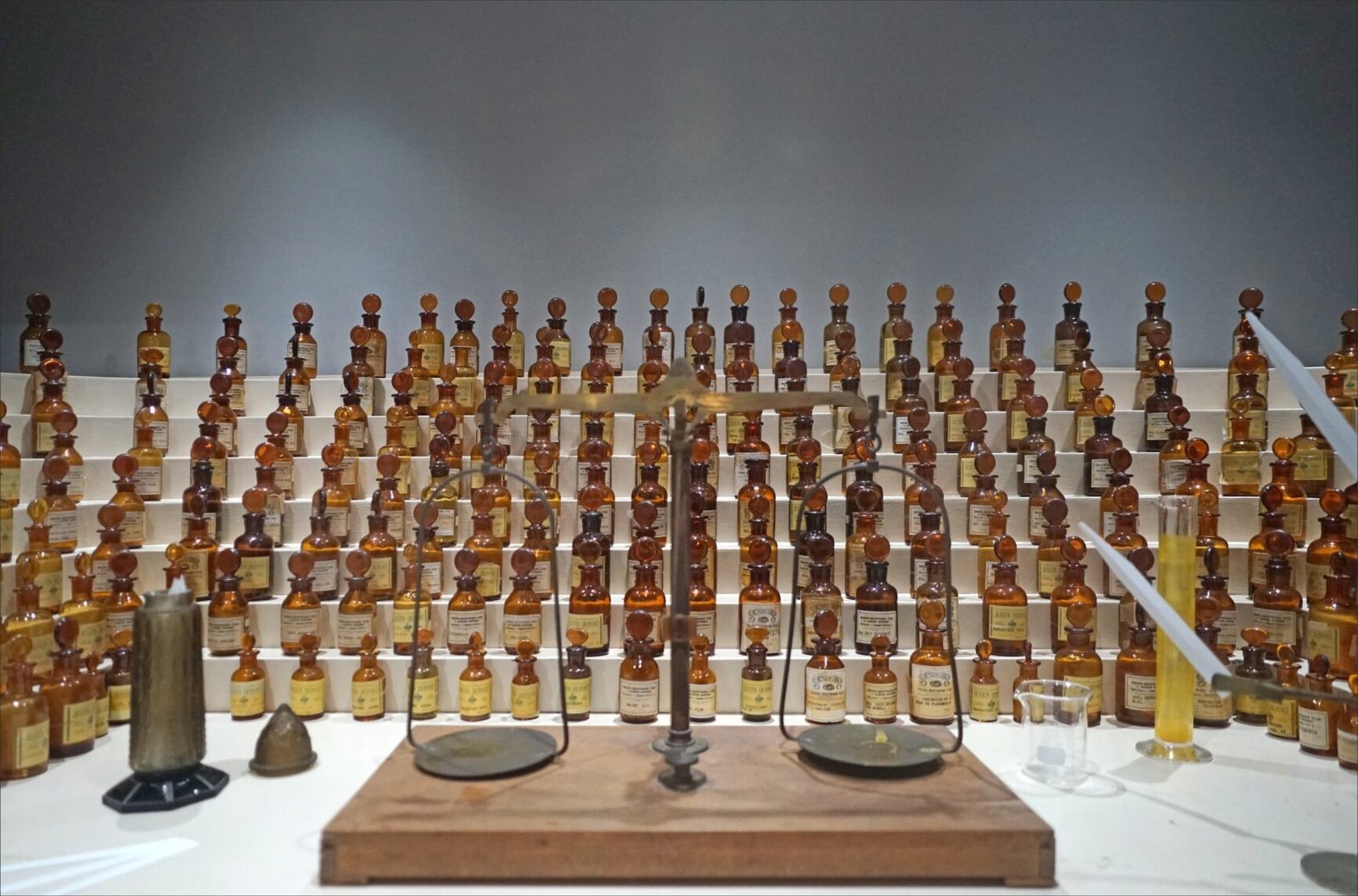
Every fragrance description lists its notes, usually in three tiers: top, heart and base. Perfume notes explained in a sentence: a fragrance is not one smell but a sequence. Some of its materials evaporate within minutes, some over hours and some linger into the next day, so what you smell changes as the day goes on. The three tiers are a way of describing that change.
Here is what each tier means, where the idea came from and how much weight to give it.
Perfume notes explained: what a note is
A note is a single, recognisable impression within a fragrance: bergamot, say, or cedar, or rose. Sometimes it is one material. Often it is an accord, several materials blended so that together they read as a single smell, sometimes one that does not exist in nature at all.
This is worth knowing, because a list of notes is a description, not a recipe. When Henley lists “clean linen” in its heart, there is no linen in the bottle; it is an accord that smells of starched shirts drying in the sun. A note of cut grass is likewise usually built rather than gathered. Perfumers often reach for a material called cis-3-hexenol, sometimes known as leaf alcohol, which is part of what a leaf gives off when it is torn or cut.
Where the idea came from
The language is musical, and has been for a long time. In The Art of Perfumery, first published in London in 1855, the English perfumer Septimus Piesse suggested that there is an octave of odours like an octave in music, with citron, lemon and verbena forming a higher octave of smells. The edition of 1862 set out a full “gamut of odours”, giving each smell its own note on the stave, from patchouli in the bass upwards. Words such as “note”, “accord” and “harmony” have stayed in the trade ever since.
The working division into top, heart and base is often credited to Jean Carles (1892 to 1966), the Grasse perfumer who became the first director of the Roure perfumery school in 1946, though sources differ, and some trace the pyramid back to the nineteenth century. Carles studied how quickly different materials evaporate, sorted them accordingly and taught his students to compose from the bottom up: base first, then heart, then the top. His own perfume organ, the tiered desk of bottles a perfumer works at, is kept at the Musée International de la Parfumerie in Grasse, and it is the photograph above.
Top, middle and base notes
What sorts a material into its tier is volatility: how readily it evaporates from warm skin. Broadly, small, light molecules leave first; large, heavy ones leave last.
Top notes
The top notes are what you smell in the first minutes. They are bright, sharp and quick: citrus peels such as bergamot, lemon and bitter orange, light spices such as pink pepper and cardamom and fresh green and herbal notes. They give a fragrance its first impression, and they are the reason a fragrance smelled on a paper strip in a shop can seem quite different by the time you reach home.
Heart notes
The heart, also called the middle notes, arrives as the top begins to fade, and it is the character of the fragrance for most of the hours you wear it. Flowers usually live here, along with many herbs, spices and softer woods. In The Library, for instance, the heart is tobacco leaf, papyrus and orris, the powdery root of the iris, after an opening of pink pepper, cardamom and bergamot.
Base notes
The base is what remains: woods, resins, mosses, musks and ambers. These materials are heavy and slow, and they also hold the lighter materials back a little, which is why perfumers sometimes call them fixatives. The base is what a jacket still smells of the next morning. The Library settles on Virginia cedar, labdanum and benzoin.
How long do top notes last?
Not long: minutes rather than hours, with most of the brightest materials usually gone within the first half-hour or so, though some sources allow an hour or more. Beyond that, any figure needs a pinch of salt. Published timings for the heart and base vary widely from one source to another, because they depend on the materials, the concentration, the skin and the weather. Some base materials can still be detected a day or more later; a citrus cologne may be almost gone by lunch.
We would rather not give you a number than give you a false one. Wear the fragrance, and notice.
Why the pyramid is a simplification
Notes are usually drawn as a pyramid, with the top notes as its point. It is a useful picture, but a picture all the same.
- Everything is there from the start. The base materials do not wait their turn; they are on your skin from the first spray. What changes is the balance of what is still evaporating.
- Notes affect one another. A base note can change how a top note smells, and an accord can smell like none of its parts. The bergamot, labdanum and oakmoss of a chypre are the classic case.
- Some fragrances barely move. Some modern compositions are built to smell much the same from start to finish, and their pyramids are drawn more for custom than for accuracy.
- Tiers are a matter of judgement. One house lists vetiver in the heart and another in the base. Both can be right.
How to smell the tiers for yourself
Spray once on the inside of the wrist and wait a minute for the alcohol to evaporate before you smell it; the first wet breath is mostly alcohol. Smell again after twenty minutes, after two hours and in the evening. The shape of the fragrance is in those changes.
Perfumers use paper strips all the time, but at a shop counter a strip is usually smelled once, in the first minute, which shows the opening and little else. Skin, over a whole day, shows how a fragrance behaves on you. That is the reason our Discovery Set, which opens with our first pre-orders, asks you to give each fragrance a whole day.
Every note in each of our six compositions is set out, top, heart and base, on its own page, all six gathered on The Fragrances, and The Consultation will suggest two to begin with. Read the notes once, then put one on and see how far the description holds.