29 October 2026
Bonfire Night, woodsmoke and the smoky perfume of November
Bonfires have been lit on the fifth of November since 1605. What woodsmoke is made of, why it stays with us and how a smoky perfume can keep it without smelling of ash.
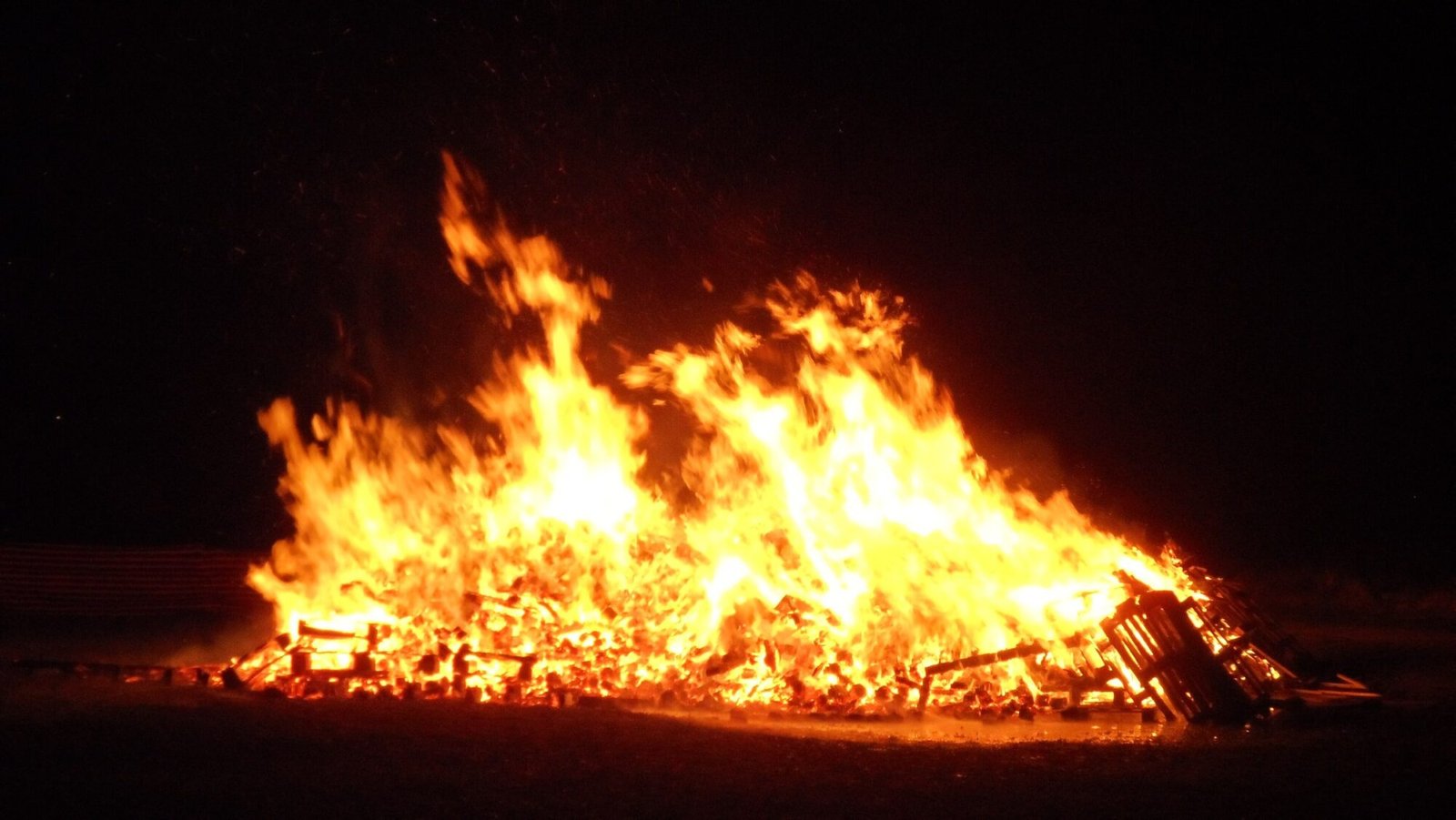
Bonfire Night smells of wet leaves, struck matches and a wool scarf that has been out in the cold a little too long. By the morning after, the smoke is in your coat, your hair and the hall, and for a day or two the whole of November seems to carry it. It is one of the few smells that nearly everyone in Britain shares, which is perhaps why a good smoky perfume can feel so familiar the first time you wear it.
Remember, remember
Bonfires on the fifth are more than four hundred years old. After the Gunpowder Plot of 1605 was discovered, Parliament met in January 1606 and passed the Thanksgiving Act, which made services and sermons on the fifth of November an annual event. According to Parliament’s own history of the Plot, the day soon came to be marked with church bells and bonfires, and fireworks were part of some of the earliest celebrations.
The figure on top of the fire changed over the centuries. Effigies of the Pope, or of the devil, seem to have been burned from the reign of Charles I. Guy Fawkes took their place later, and many of the chants children used when collecting wood and money for the fire date from the nineteenth century; they survive in playgrounds still. The religious edge has long since gone. What remains is a cold night, a field or a back garden and a fire.
This year the clocks went back on Sunday, and the dark now comes down before most of us are home. The fifth falls on a Thursday, and plenty of displays will be held on the weekend either side.
What woodsmoke is made of
Wood is made mostly of cellulose, hemicellulose and lignin. Lignin is the stiff, complicated material that makes a tree woody, and when it smoulders or burns incompletely, as wood on a bonfire largely does, it breaks down into a family of molecules called methoxyphenols. Two of them, guaiacol and syringol, are among the molecules that give smoke its smell.
Softwood and hardwood
Different trees build their lignin differently. Conifers make a kind that gives mostly guaiacols when it burns. Broadleaved trees such as oak, ash and beech give more syringols as well. Chemists studying smoke in the air can use the balance between them to tell what kind of wood was burned. The rest of us can tell by nose: a pine fire smells sharp and resinous, an oak fire rounder and drier.
A bonfire in a field is rarely one wood. It is fallen branches, old fence posts, prunings and whatever else was left by the gate, and that is part of its character. Add damp leaves, which smoulder and give off a heavy, sweetish smoke, and you have the smell of the fifth of November.
A name shared with a perfume note
Guaiacol takes its name from guaiac resin, from which it was first obtained in the nineteenth century. Perfumers use a related name for a different material: guaiac wood, whose oil is soft, warm and faintly smoky. It is one of the notes in the base of Highland, which may be one reason it sits so comfortably beside a fire.
Why the smoke stays with us
Smoke clings. It settles into wool and hair, and a coat worn to a bonfire can still carry it days later. That persistence is part of why the memory is so strong: you do not smell Bonfire Night once, you smell it for the rest of the week.
For many of us it was also among the first nights we were allowed to stay up late, out of doors, in the dark. One breath of woodsmoke on a cold evening can still put you back in a field, aged nine, holding a sparkler at arm’s length and wondering whether your gloves will survive.
What makes a smoky perfume wearable
Nobody wants to smell of a bonfire. A smoky perfume that simply reproduced woodsmoke would be heavy, a little acrid and tiresome by lunchtime. The art is in using a thread of smoke and building something warmer around it, so that the smoke reads as memory rather than ash.
Perfumers have several ways to do it:
- Birch tar, dark and leathery, the smell of a tack room or a well-used stove.
- Lapsang souchong, the tea from the Wuyi Mountains whose leaves are dried over pinewood fires and take the smoke into themselves.
- Peat smoke, earthier and wetter than woodsmoke, the smell of a Highland grate.
- Resins and woods, such as labdanum, guaiac and cedar, which carry smoke without letting it dominate.
Around them go the things that make the smoke kind: pine and juniper for fresh air, heather and moss for the ground underfoot, a little pepper for the cold.
Highland, and the fire in the grate
Highland is our aromatic smoky fragrance, and it is the one we would wear on the fifth. It opens cold and resinous with juniper, Scots pine and black pepper. The heart is heather, lapsang tea and labdanum. Then the fire is lit: peat smoke, guaiac wood and damp moss, drying down to something warm, dark and quietly reassuring.
Its memory is a lodge late in the season, with mist lying in the glen, one lamp lit and the long walk home across the heather. It is not a bonfire in a field, but it belongs to the same cold evenings. Wear one spray, or two on a cold day. It is at its best out of doors and by the fire, on tweed, knitwear and waxed cotton.
Two others for cold evenings
Saddle Room, our leather, carries a thread of birch smoke through hay absolute and suede. The Library, a woody amber, is built around tobacco leaf, orris and cedar; it has no real smoke in it, but its tagline ends on the last embers of an oak fire. Neither is smoky in the way Highland is, but both belong to the season of fires.
If you cannot decide between the three, the Consultation asks about a room, an hour and a cloth, and suggests two of the six from your answers.
A perfume that smells like bonfire, the morning after
The best smoky fragrances behave the way the smoke does on a good coat the morning after Bonfire Night: faint, warm and only noticeable when someone stands close. If you are wearing one on the fifth itself, wear less than usual. The fire will do the rest, and your scarf will remember it for you.
And if there is a fifth of November you have never forgotten, a particular field, a particular fire, write it down and send us the memory. We would like the seventh HERITAGE fragrance to be made from one of the memories we are sent; entering is free, and entries close at 23:59 on 31 January 2027.