24 October 2026
The English social season, from Cheltenham to Goodwood
The English social season once followed Parliament. Now it follows the turf, the river and the motor circuit, from Cheltenham in March to Goodwood in September.
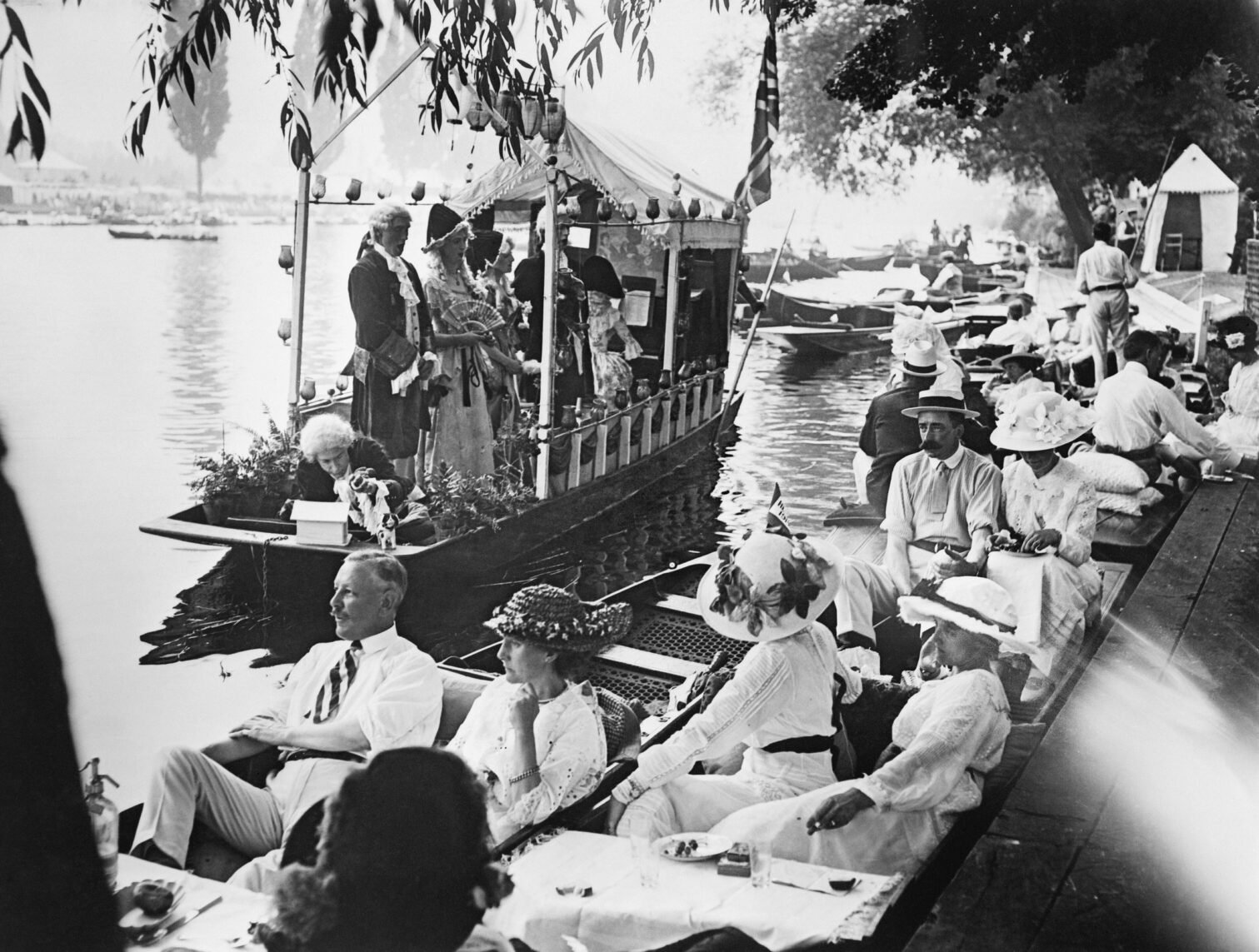
The English social season used to be a London affair. Families with a house in the country came up to town in the spring, while Parliament sat, and went home again in August. The calendar has changed since, and so has almost everything about who goes. But the shape survives: a run of days on the turf, on the river and at the motor circuit, from Cheltenham in March to Goodwood in September. Here it is, month by month.
What the English social season was
For most of its history the Season followed Parliament. Members and peers spent the sitting in London, and their families came with them for the balls, the dinners and the presentations at court. It ended, more or less, with the grouse.
The twelfth of August had been fixed by statute in 1773 as the opening of grouse shooting, and by the nineteenth century there was, as the History of Parliament puts it, a strong assumption that Parliament could not sit beyond it. In fact it quite often did. But the idea held, and the Glorious Twelfth became the full stop at the end of the London summer.
The formal Season lost its centre in 1958, when the presentation of debutantes at court came to an end. What remained was the sporting calendar, which had been growing up around the Season all along. That is what most people mean by the Season now.
Spring: Cheltenham, Badminton and Chelsea
The Cheltenham Festival, March
The year opens in the Cotswolds, with four days of jump racing in the middle of March. The Gold Cup, the race that gives the Festival its weight, was first run in 1924 and won by a horse called Red Splash. It is a meeting for tweed, good boots and a coat that has seen weather. Cheltenham comes back into the diary in mid-November too, for its November Meeting.
Badminton Horse Trials, May
In early May the eventing world goes to the park of Badminton House in Gloucestershire, the seat of the Dukes of Beaufort. Dressage, cross-country and showjumping over several days; picnics on the tailgate; a great deal of waxed cotton. It is the most rural day in the calendar, and the least concerned with being looked at.
RHS Chelsea Flower Show, May
Later in May the Royal Horticultural Society fills the grounds of the Royal Hospital Chelsea with show gardens. The first Chelsea show opened there in 1913, and apart from the two world wars and 2020 it has been held there ever since. It is the one spring fixture that smells of something other than horses.
Summer: Ascot, Henley and Goodwood
Royal Ascot, June
Queen Anne founded Ascot in 1711, after riding out from Windsor and finding a stretch of heath that looked right for racing. The first meeting was held that August. Royal Ascot is now five days in June, each afternoon opened by the Royal Procession, and its dress code is famously exacting.
Henley Royal Regatta, late June or early July
The first regatta at Henley was held in 1839, for one afternoon. In 1851 Prince Albert became its patron, and it has been Royal ever since. It now runs for several days, finishing in the first week of July, and the rowing is serious, whatever happens on the banks.
The Stewards’ Enclosure keeps a dress code it takes seriously: lounge suits, or jackets or blazers with trousers, and a tie or a cravat for men; for women, dresses or skirts with a hemline below the knee, or jackets or blazers with trousers, or trouser suits. Linen is forgiven its creases, and boaters are seen everywhere.
Our Henley belongs to these days. It is the brightest of our six: bergamot, cucumber and garden mint, then fig leaf, orange blossom and clean linen, over white cedar, ambrette and vetiver. Its memory is the river in the first week of July, mist lifting from the water before the first race. Two sprays at the throat, and one over a linen collar if you like.
The Goodwood Festival of Speed, July
In 1993 the present Duke of Richmond, then Lord March, held the first Festival of Speed in the park at Goodwood, reviving the hill climb his grandfather had held there in 1936. It is now four days in July, and in 2027 it runs from the fifteenth to the eighteenth.
Glorious Goodwood, the end of July
The horses come to Goodwood later the same month. The first public race meeting there was held in 1802, and over the century that followed the press came to call it Glorious Goodwood. It is a lighter, more summery meeting than Ascot, and the story goes that Edward VII set the tone, by leaving his morning coat behind and arriving in a linen suit and a panama hat.
The Twelfth, and the turn to the country
August is the gap in the calendar, and always has been. Parliament rises, London empties, and the Season, in its old sense, ends on the moor on the twelfth. The rest of the year belongs to the country: shooting in the autumn, hunting through the winter and racing in all weathers.
Autumn: the Revival and Burghley
Goodwood Revival, September
The motor circuit at Goodwood held its first race meeting in 1948 and its last in 1966. In 1998 it reopened for the first Revival, a meeting at which the cars belong to those years and the crowd dresses to match. It is the one fixture where a tweed cap and driving gloves are the plain choice rather than a costume. In 2027 it runs from 17 to 19 September.
For the cars, there is a longer history in our note on why British racing green is green. For the paddock at first light, there is Racing Green: galbanum and cut grass, violet leaf and vetiver, settling on saddle leather, oakmoss and cedarwood.
Burghley Horse Trials, early September
Badminton’s autumn counterpart is held in the park at Burghley House, near Stamford, at the beginning of September. In 2027 it runs from the second to the fifth. The light is lower, the mornings are cold and the tweed comes back out of the cupboard.
Dressing, and scenting, for the Season
The Season has always been about clothes, and the clothes have always been about the weather. Linen and a boater for the river. Tweed and a waxed jacket for Cheltenham and Badminton. A morning coat for the Royal Enclosure. Each day has its uniform, and the people who wear it best are usually the ones who look as if they did not think about it.
Fragrance follows the same rule. What suits a July afternoon by the water would be lost in a cold March paddock, and a leather made for October would be heavy in the sun.
For the colder horse days, Cheltenham in March and again in November, our Saddle Room is the natural companion. It opens on saffron, bitter orange and clary sage, then hay absolute, suede and a thread of birch tar, over tonka bean, sandalwood and leather. Its memory is the tack room before the meet: saddles on their racks, bridles hung to dry. It is a leather for October to March, on tweed and suede.
Whatever you choose, wear less than you think. The Season is a crowded place, and the best fragrance at it is the one noticed by the person beside you and by nobody else.
Which days are yours
Nobody goes to all of them. Most people have one or two that matter: a family day at Henley, a first Cheltenham, a September at Goodwood that turned into a tradition. Those are the days a fragrance should belong to.
If you are not sure which of ours would suit yours, take the Consultation: four questions, about a room, an hour, a cloth and how you would like to be remembered, and the House will suggest two.