25 October 2026
Why was oakmoss banned in perfume? It was restricted, not banned
Oakmoss was never quite banned. Two of its natural components were, and the rest is limited. What the rules say, why they came in and how perfumers adapted.
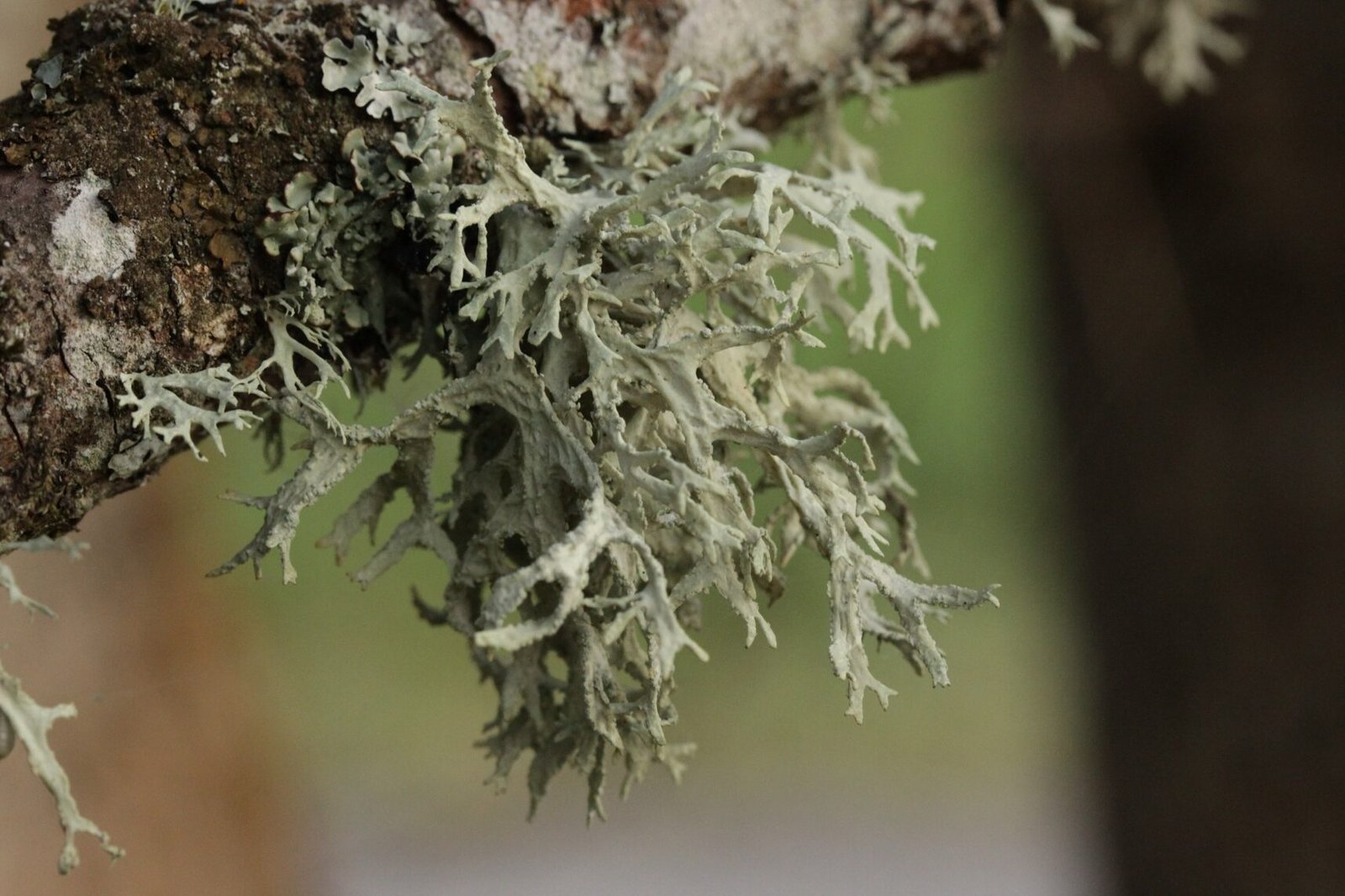
Why was oakmoss banned in perfume? It is a question people often ask about the old chypres, and the honest answer is that it was not, quite. Oakmoss is still used. What changed is that two of its natural components, atranol and chloroatranol, may no longer be used in cosmetic products sold in the EU or the UK, and the amount of oakmoss extract a perfumer may use is limited. The moss stayed; it simply had to change.
What oakmoss is
Oakmoss is not a moss at all but a lichen, Evernia prunastri, a pale grey-green growth that hangs from the branches of oaks and other trees. One French supplier describes it being gathered from young oaks in Macedonia and Morocco: local gatherers strip it from the trees in spring and autumn, and it is dried and pressed before it is sent to be extracted.
The extract smells of a wood after rain: green and a little bitter, inky, earthy and older than it first seems. On its own it is dark and rather severe. In a composition it gives a fragrance depth and a long, quiet finish.
Why perfumers cared so much
Oakmoss is the foundation of the chypre family. In 1917 François Coty launched a perfume called Chypre, built on an accord of bergamot, labdanum and oakmoss, and so many perfumes followed its pattern that the name became the name of the family: bright citrus above, with labdanum resin and moss beneath it. Take the oakmoss out and the shape of the whole thing changes. We set out the family more fully in What is a chypre?
The problem: atranol and chloroatranol
Natural extracts are mixtures of many molecules, and oakmoss contains two, atranol and chloroatranol, that are known contact allergens: in some people they cause an allergic reaction on the skin.
In June 2012 the Scientific Committee on Consumer Safety, which advises the European Commission, gave its opinion that the two should not be used in cosmetic products, because, together with one other fragrance ingredient, they were the fragrance allergens behind the most cases of contact allergy in previous years. It also noted that both are natural components of oakmoss and of its cousin, treemoss (Evernia furfuracea, now usually called Pseudevernia furfuracea).
So why was oakmoss banned in perfume, if it was not?
Because the rules that followed are easy to misread as a ban. There are two sets of them, and they work together.
The law: EU Regulation 2017/1410
In August 2017 the European Commission added atranol and chloroatranol to the list of substances prohibited in cosmetic products. Under Regulation (EU) 2017/1410, no new cosmetic product containing them could be placed on the market from 23 August 2019, and from 23 August 2021 no product containing them could be made available at all, which meant old stock had to come off the shelves too.
The regulation gave the industry longer than usual to adjust, and said why. It recognised that reformulating a fragrance is an exceptionally complex and lengthy business, and that customers worry about their fragrances smelling different afterwards. Anyone who has noticed a favourite chypre change over the years will know the worry was fair.
The regulation came into force on 23 August 2017, while Britain was still in the EU, and it was carried into British law at Brexit. The Great Britain version of the cosmetics rules lists both substances as prohibited, with the same 2019 and 2021 dates, and the UK has not amended the regulation since; in Northern Ireland the EU regulation itself still applies. A fragrance sold anywhere in the UK today is held to the same rule.
Oakmoss extract also appears on the list of fragrance ingredients that must be named on the label of a product left on the skin once it is present above 0.001 per cent, which is why you will sometimes see Evernia prunastri extract on the back of a box.
The industry standard: IFRA
The International Fragrance Association, IFRA, sets standards that its members follow for the safe use of fragrance ingredients. Its standard for oakmoss extracts, in the form published with the 49th Amendment in 2020 and still current, does three things:
- It limits how much oakmoss extract a finished product may contain. The limit depends on the kind of product. For the category that covers fine fragrance, such as eau de parfum and eau de toilette, it is 0.1 per cent of the finished product.
- It specifies that atranol and chloroatranol should each be below 100 parts per million in the oakmoss extract itself.
- It says the extract must not contain added treemoss, and that where treemoss is also used, the two together must stay within the same limit.
The standard notes that its limits are tied directly to keeping atranol and chloroatranol below trace levels in the finished product, and that they have not been raised since the 43rd Amendment, published in 2008.
How perfumers changed the moss
The answer was not to abandon oakmoss but to change it. Suppliers developed ways of treating the extract to take out most of the atranol and chloroatranol, and these low-atranol extracts let perfumers go on using oakmoss within the rules. One supplier, Biolandes, sells a range of them and describes them as made to comply with IFRA and with European cosmetics law.
Perfumers also lean on synthetic materials designed to carry the mossy part of the effect. The fragrance company Givaudan, for example, describes two of its own materials, Evernyl and Orcinyl 3, used together as the heart of an oakmoss substitute.
Does it smell the same?
Not exactly, and it would be odd to pretend otherwise. Removing molecules from a natural extract can take some of its character with them, and some people who knew the older material find the newer oakmoss lighter and less dark. Others find modern chypres cleaner and easier to wear. Either way, the family survives: a chypre is still recognisable by the contrast between a fresh citrus top and a warm, mossy, woody base.
Where to find it in our six
We can only tell you what we tell everyone on the product pages, and no more. Racing Green, our green chypre, lists oakmoss in its base, with saddle leather and cedarwood, beneath a heart of violet leaf, vetiver and clary sage and an opening of galbanum, bergamot and cut grass. It is the paddock at first light, before anyone important has arrived.
If you like a mossy, earthy finish but would rather have smoke than leather, Highland, our aromatic smoky fragrance, ends on peat smoke, guaiac wood and moss. And if you are not sure which family you lean towards, all six are set out by family on the fragrances page, and each has its notes on its own page.
Or let us suggest a starting point: the Consultation asks four short questions and names two of the six to try first.